

Imagine exchanging vows with forested hills in the background, celebrating with your closest people under an open sky, and waking up the next morning to birdsong instead of city traffic. That is the appeal of a Destination Wedding in Jim Corbett.
But a beautiful setting is only one part of the experience. A destination wedding brings together accommodation, venues, food, décor, transportation, guest activities and multiple wedding functions. Planning all of these from another city can quickly become complicated.
Jim Corbett offers a useful combination of nature, resort accommodation, outdoor spaces and accessibility from Delhi NCR, making it an appealing choice for couples who want their wedding to feel like a celebration as well as a short holiday. Uttarakhand Tourism also highlights the Corbett region's road connectivity and attractions such as jungle safari, birdwatching and nature experiences.
So, how do you actually plan a wedding here? Let's break it down.
Why Choose Jim Corbett for a Destination Wedding?
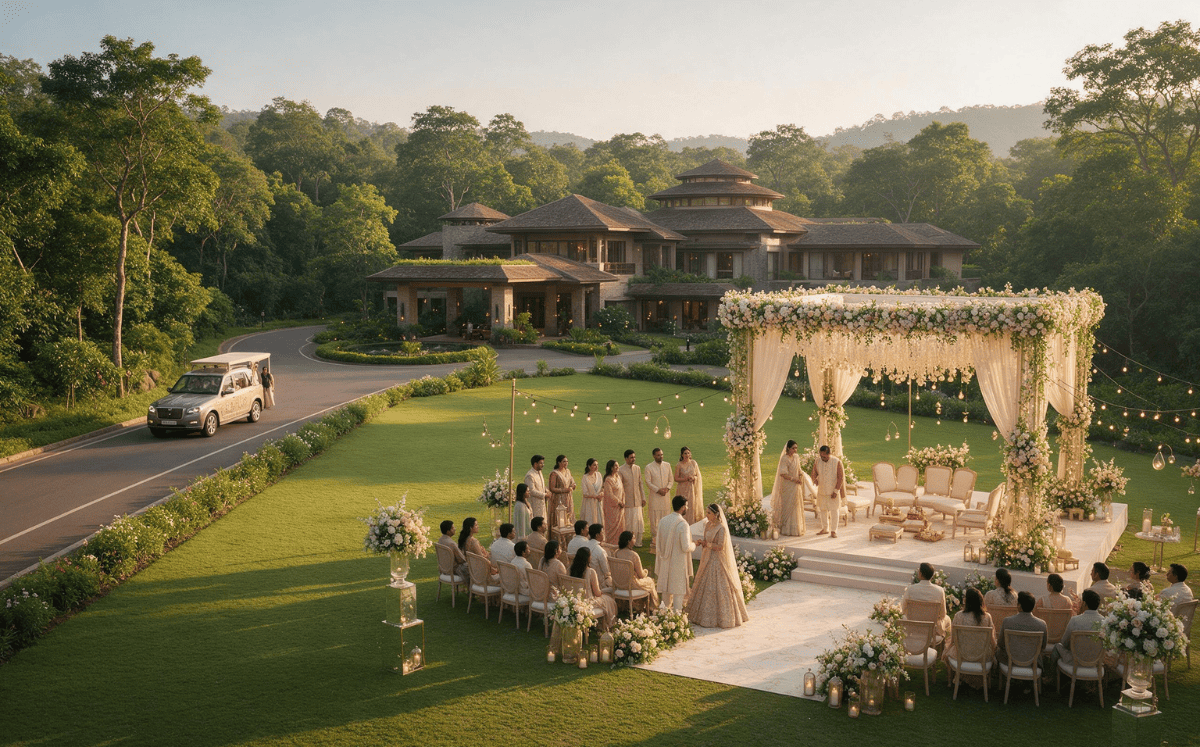
A destination wedding in Jim Corbett works particularly well for couples who want something different from a conventional city banquet.
The natural surroundings provide a distinctive backdrop for ceremonies and photographs, while resorts around the Corbett region offer accommodation and event spaces in one destination. Depending on the property, couples can plan outdoor celebrations, indoor functions, family gatherings and leisure activities for guests.
There is also a practical advantage: Ramnagar is well connected by road, and Uttarakhand Tourism describes Delhi–Corbett as roughly a 270-km road journey taking around 6–7 hours.
For guests travelling from Delhi NCR, this can make Corbett easier to reach than destinations that require flights.
What Should You Plan First?
Before choosing décor or deciding on the wedding theme, start with three things:
Guest count + wedding dates + type of celebration
These three decisions influence almost everything else.
For example, an intimate wedding with close family may require a very different venue from a large celebration involving several hundred guests. Similarly, a two-day wedding needs a different schedule from a three-day celebration.
Once these basics are clear, start shortlisting resorts.
How to Choose the Right Wedding Resort in Jim Corbett
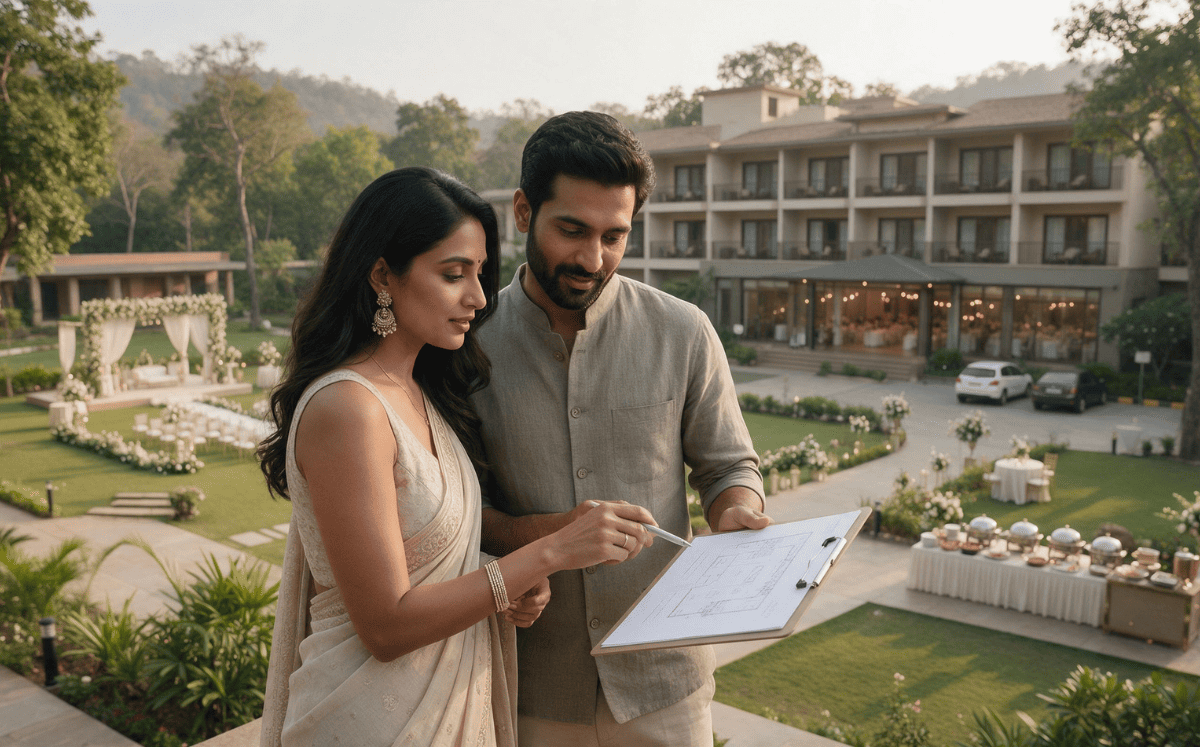
The most beautiful Corbett Resort is not necessarily the best wedding venue for you.
Instead, check whether the property can comfortably support your complete event.
Check the following:
Number of guest rooms available
Maximum event capacity
Size and layout of lawns
Indoor backup venue
Parking facilities
Dining and catering arrangements
Power backup
Guest accessibility
Event timing restrictions
Décor and vendor policies
Space for different wedding functions
One particularly important consideration is room inventory.
If most of your guests can stay at the same property, the entire wedding becomes easier to manage. Guests do not have to travel between different hotels for every function, and family members can spend more time together.
Plan Your Wedding Functions Around the Resort
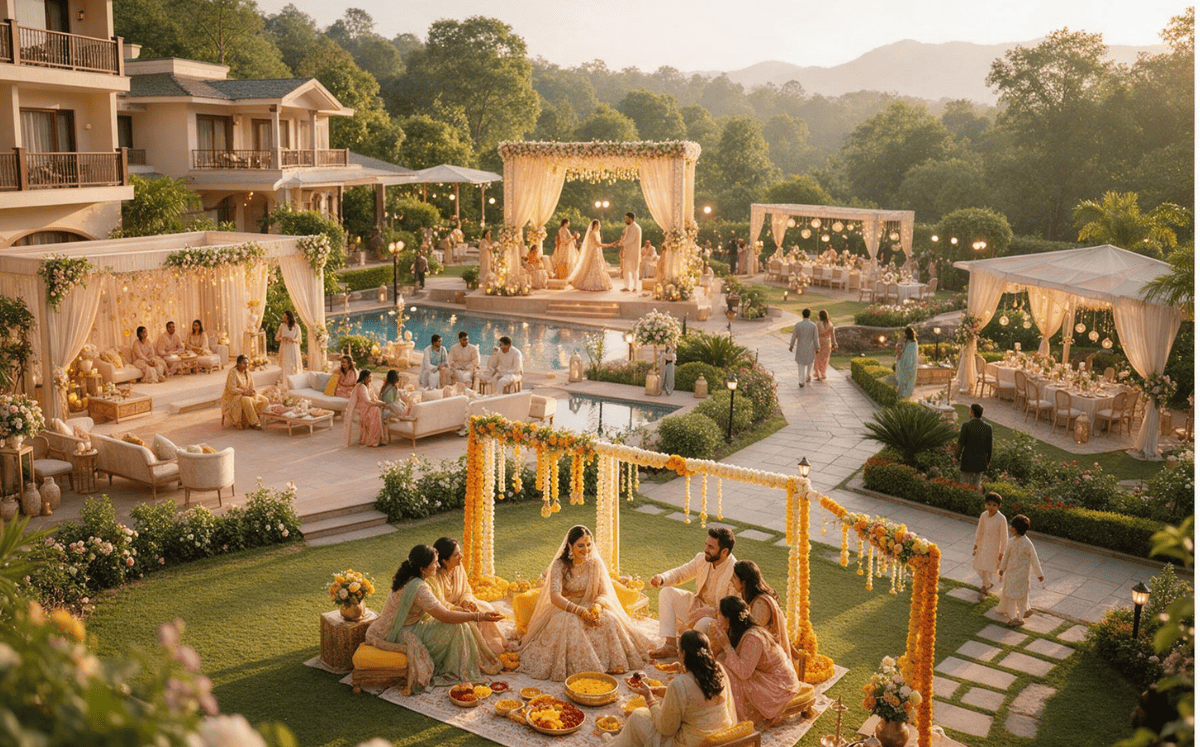
One advantage of a destination wedding is that the celebration does not have to happen in one place or feel like one long event.
You can give every function its own atmosphere.
Day 1: Welcome & Family Gathering
Guests arrive, check in and settle into the resort. A welcome lunch or evening gathering followed by a bonfire can create a relaxed beginning.
Day 2: Mehendi & Sangeet
The afternoon can be reserved for Mehendi, followed by Sangeet in the evening.
This is where an outdoor lawn, poolside area or dedicated event space can add variety to the celebration.
Day 3: Haldi, Wedding & Reception
Begin with a morning Haldi ceremony, followed by some downtime before the main wedding celebration.
Depending on the venue and weather, the pheras can take place outdoors, with the reception continuing into the evening.
The exact schedule should always be adjusted according to the resort's event policies and the wedding family's requirements.
When Is the Best Time for a Jim Corbett Wedding?
October to March is generally considered the preferred period for outdoor wedding celebrations because the weather is more suitable for ceremonies and guest activities. November to February can be particularly popular, so availability should be checked well in advance.
December and January can bring colder evenings, which is important if you are planning an outdoor Sangeet, reception or late-night gathering.
April to June can work for couples who are comfortable with warmer daytime conditions, while monsoon months require greater flexibility for outdoor events.
Tip: Never plan an outdoor wedding without an indoor or covered backup option.
Don't Forget the Guest Experience
Your wedding guests are also taking a trip.
That means their experience should extend beyond the wedding functions.
Depending on availability and applicable park rules, you can consider activities such as:
Jungle safari
Nature walks
Birdwatching
Bonfire evenings
Resort leisure activities
Local sightseeing
Family gatherings
The Corbett region is particularly suited to this kind of combination because wildlife and nature experiences are an important part of the destination.
One important point: safari planning should be handled separately from wedding-event planning, because park entry and safari arrangements are subject to the authorities' rules and availability. The official Corbett National Park website currently notes controlled safari booking arrangements.
How Far in Advance Should You Plan?
For a destination wedding, early planning can make a significant difference.
A practical approach is:
9–12 months before: Shortlist venues and dates
6–9 months before: Confirm accommodation and major vendors
3–6 months before: Finalise décor, food, entertainment and guest logistics
1–3 months before: Confirm room allocation, itinerary and event schedule
Final weeks: Conduct a complete coordination check
Peak wedding dates can become difficult to secure, so it is better to shortlist your preferred venues before finalising invitations.
Should You Book a Complete Wedding Package?
This depends on how much planning you want to handle yourself.
A destination wedding involves coordination between the resort, decorator, caterer, photographer, entertainment team, transportation providers and guests. Managing each vendor independently can become time-consuming, especially when you are travelling from another city.
If you prefer a more coordinated experience, working with an experienced destination-wedding planning team can simplify the process.
Planning a destination wedding should be about enjoying every moment, not worrying about what happens behind the scenes. With years of experience in planning and coordinating destination weddings, CYJ Events can help manage the details—from resort selection and guest arrangements to wedding functions and event coordination. If you want a well-organised, personalised and stress-free celebration in Jim Corbett, their experienced team can help turn your wedding plans into a memorable experience for you and your guests.
The important thing is to discuss exactly what is included before confirming any package.
A Simple Jim Corbett Wedding Checklist
Before you finalise your wedding, make sure you have checked:
☐ Wedding date and guest count
☐ Resort and accommodation
☐ Event spaces
☐ Indoor backup venue
☐ Catering and menu
☐ Décor and lighting
☐ Photography and entertainment
☐ Guest transportation
☐ Wedding-function schedule
☐ Safari/activity planning
☐ Vendor and resort policies
☐ Final event coordination
Make the Wedding About the Experience
A destination wedding in Jim Corbett does not have to be complicated to be memorable.
The best celebrations are often the ones where the logistics quietly work in the background while the family enjoys the actual occasion. Choose the venue around your guest requirements, plan the functions around the destination, keep a weather backup, and leave enough time for everyone to enjoy Corbett beyond the wedding itself.
Because ultimately, the most memorable part may not be the décor or the stage—it could be a quiet morning surrounded by nature, an evening spent around a bonfire, or the moment your entire family experiences the destination together.
 ..............


